
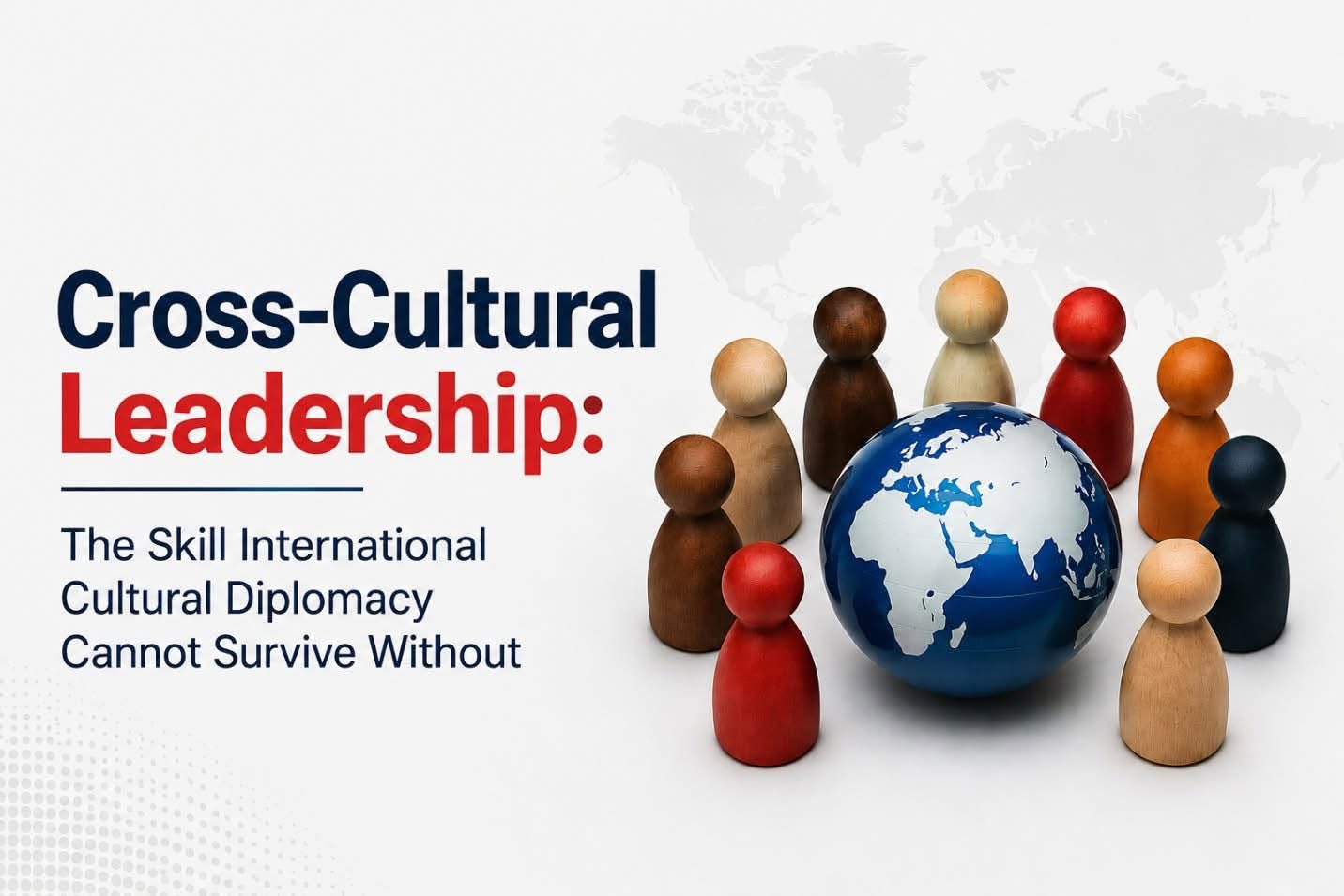
Every year, governments and institutions invest heavily in cultural diplomacy through exchanges, festivals, dialogue initiatives, and cross-border partnerships designed to build goodwill and stronger relations between nations.
Yet many of these initiatives quietly underperform.
The budgets may be there. The intentions may be good. But what is often missing is something less visible and, perhaps, more important: cross-cultural leadership.
Cultural diplomacy is not about organizing events, or signing agreements. Proximity does not automatically create understanding, and lasting relationship.
Real cultural diplomacy depends on people who can navigate different worldviews, communication styles, expectations, and ways of building trust, without losing sight of the purpose they are trying to achieve.
Strong cross-cultural leaders understand the importance of what is not always said. They can read unspoken cues, and understand that consensus and decision-making work differently across societies. They know when to push forward and when slowing down may actually move a relationship further.
This is particularly relevant today in the growing relationship between Türkiye and the Gulf. As trade, tourism, investment, and institutional partnerships deepen, those managing these relationships increasingly act not only as negotiators or officials, but also as cultural translators.
Operating across Ankara, Riyadh, Abu Dhabi, and other regional capitals requires more than understanding protocol. It requires understanding how trust is built, how hierarchy and relationships influence decisions, and how messages are received within different historical and cultural contexts.
Cross-cultural leadership is sometimes described as a “soft skill.”
It means asking questions before assuming answers. It means understanding how decisions are actually made, not how institutional structures say they are made. And it means holding firmly to your own values and objectives while remaining genuinely open to different ways of reaching them.
Cultural diplomacy, at its best, is patient work. It requires curiosity, humility, consistency, and leaders who are comfortable operating beyond their own cultural default settings.
As countries invest more in cultural diplomacy, we should invest equally in the people expected to make it work.
Because cultural diplomacy without skilled leadership can easily become symbolic. But when it is combined with strong cross-cultural leadership, it can create something far more durable: trust that survives political shifts, economic pressures, and changes in leadership.
For Türkiye, the Gulf, and the wider region, this is not a theoretical discussion. It may determine which partnerships endure for decades, and which quietly disappear once the initial enthusiasm fades.