
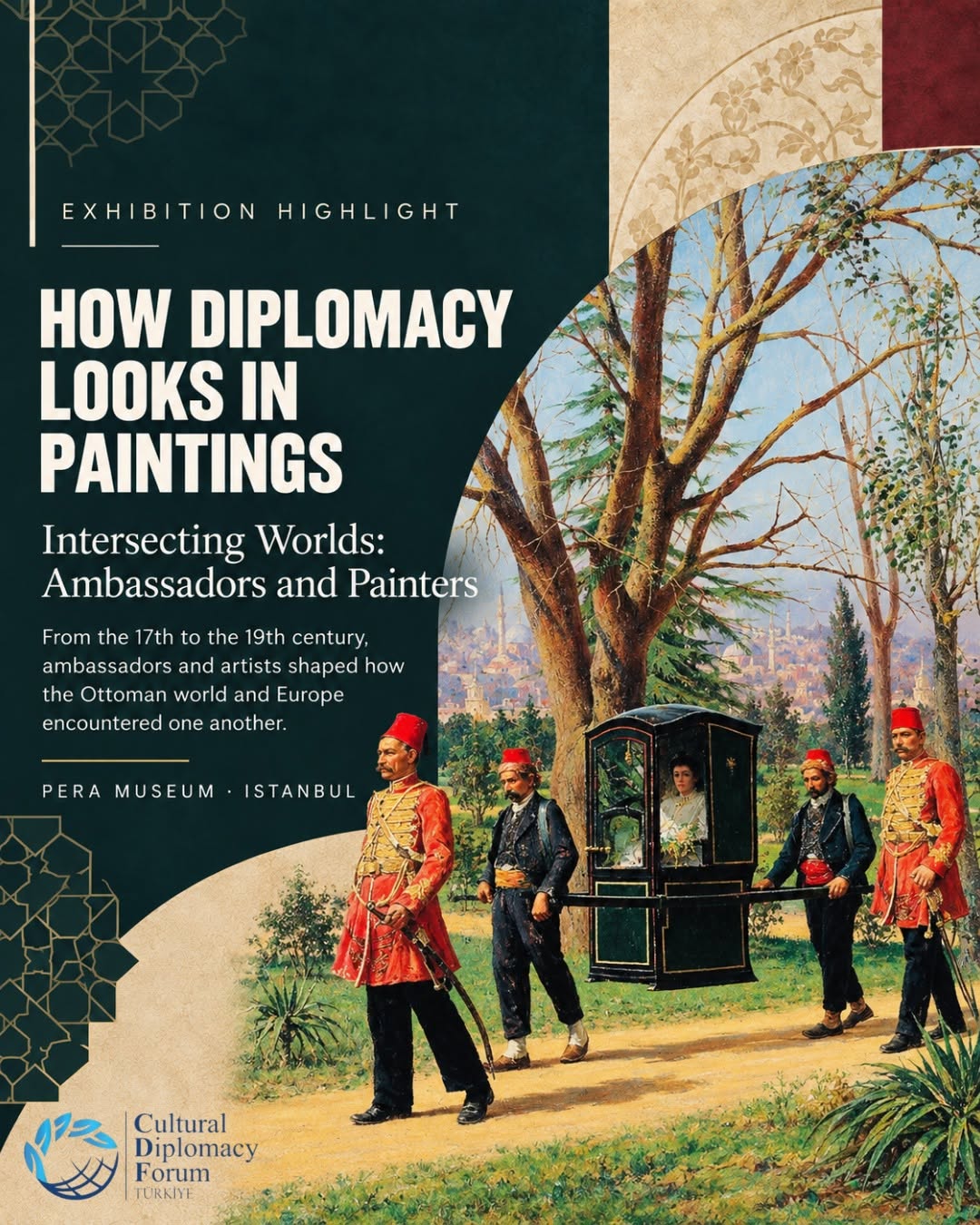
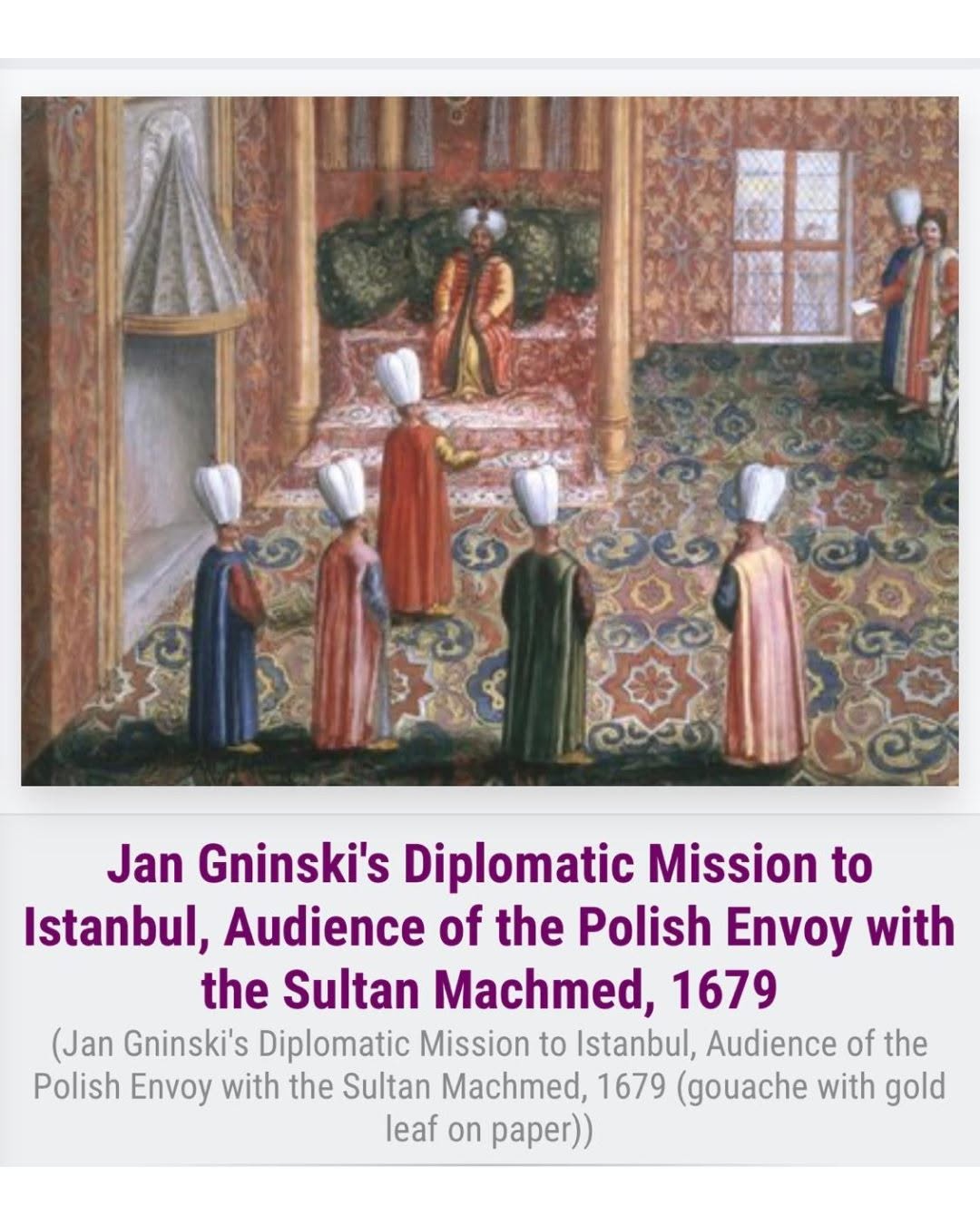
A diplomatic procession moving through Topkapı Palace… Janissaries gathering in the Second Courtyard… An ambassador received by Sultan Ahmed III. European diplomats posing in Ottoman dress, alongside sweeping views of Istanbul and the Bosphorus…
Pera Museum’s Intersecting Worlds: Ambassadors and Painters reveals a period when embassies served not only as political missions, but also as centres of knowledge, artistic patronage and cultural exchange. From the 17th to the 19th century, ambassadors commissioned artists to record ceremonies, costumes, landscapes and everyday life. These paintings complemented diplomatic reports, travelled through books and private collections, and shaped how the Ottoman world was imagined across Europe. The exhibition also shows that this exchange worked in more than one direction. Ottoman envoys observed European institutions and cultural life, wrote detailed embassy accounts and commissioned portraits of their own.
Intersecting Worlds demonstrates that cultural diplomacy did not begin with modern institutions or official cultural programmes. It was already being practised through portraiture, collecting, publishing, costume, ceremony and the movement of artists between courts. The exhibition’s paintings allow us to witness these encounters, but they also encourage a critical question: Who controlled the image through which one society became visible to another? Art could create curiosity and familiarity across cultural boundaries. At the same time, it could reinforce hierarchy, select what deserved to be remembered and turn complex societies into portable visual types. This tension between encounter and representation is precisely what makes the exhibition so relevant to cultural diplomacy today.
Our Favourite
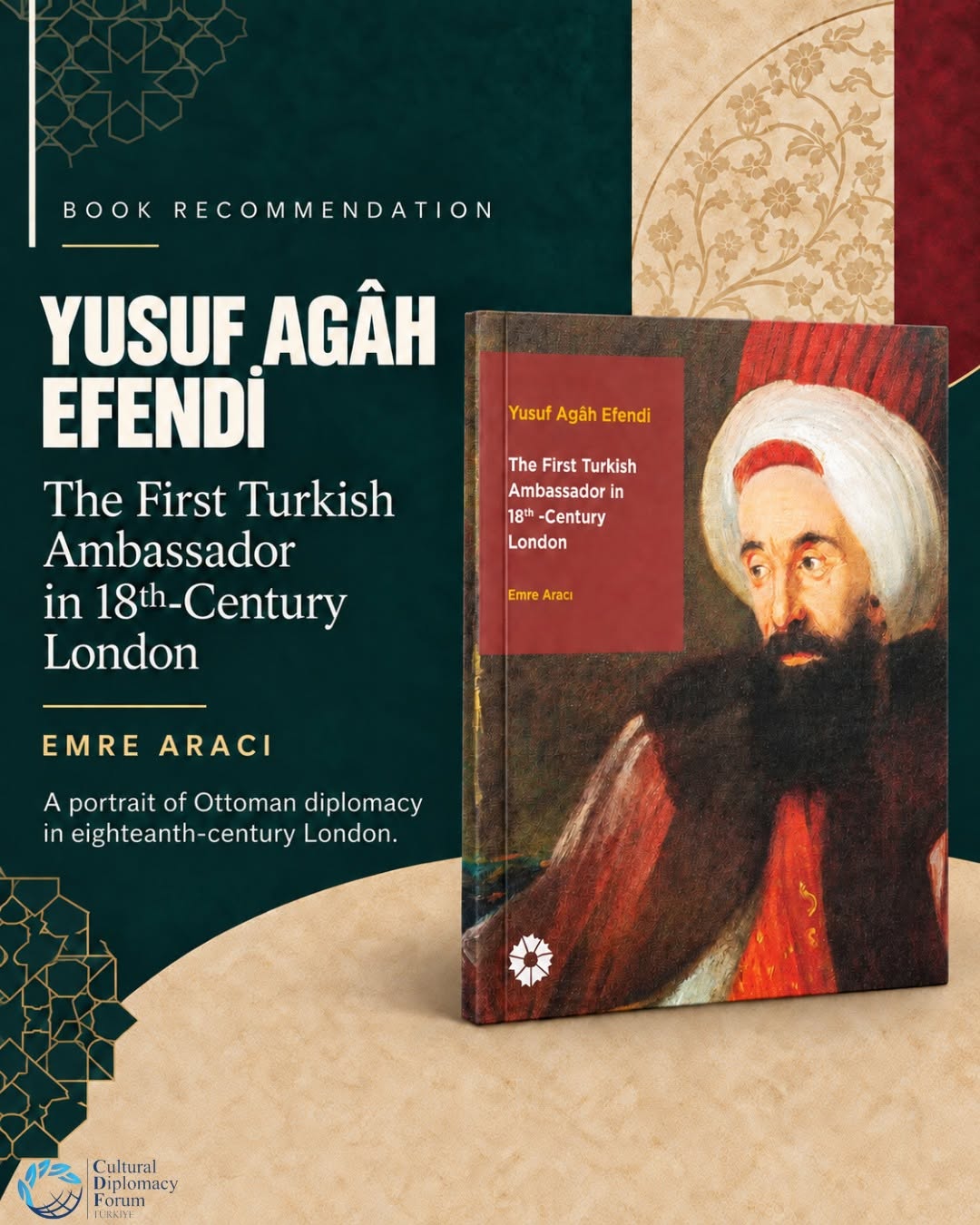
Carl Fredrik von Breda’s monumental portrait of Yusuf Agâh Efendi, the first resident Ottoman ambassador to London. Seated in a vivid red robe and white turban, Yusuf Agâh Efendi appears composed, dignified and fully aware of his representative role. His appointment in 1793 marked the Ottoman Empire’s transition towards permanent and reciprocal diplomacy.
For those who wish to explore his story further, Turkish music historian Dr Emre Aracı’s book, Yusuf Agâh Efendi: The First Turkish Ambassador in 18th-Century London, follows the ambassador through the cultural world of Georgian London, from royal ceremonies and formal dinners to concerts, balls, fireworks and the celebrated pleasure gardens of Ranelagh and Vauxhall. Together, the portrait and the book reveal diplomacy as a lived cultural encounter, extending far beyond official negotiations.
Here, art does not simply illustrate diplomacy. It becomes part of diplomacy itself.