
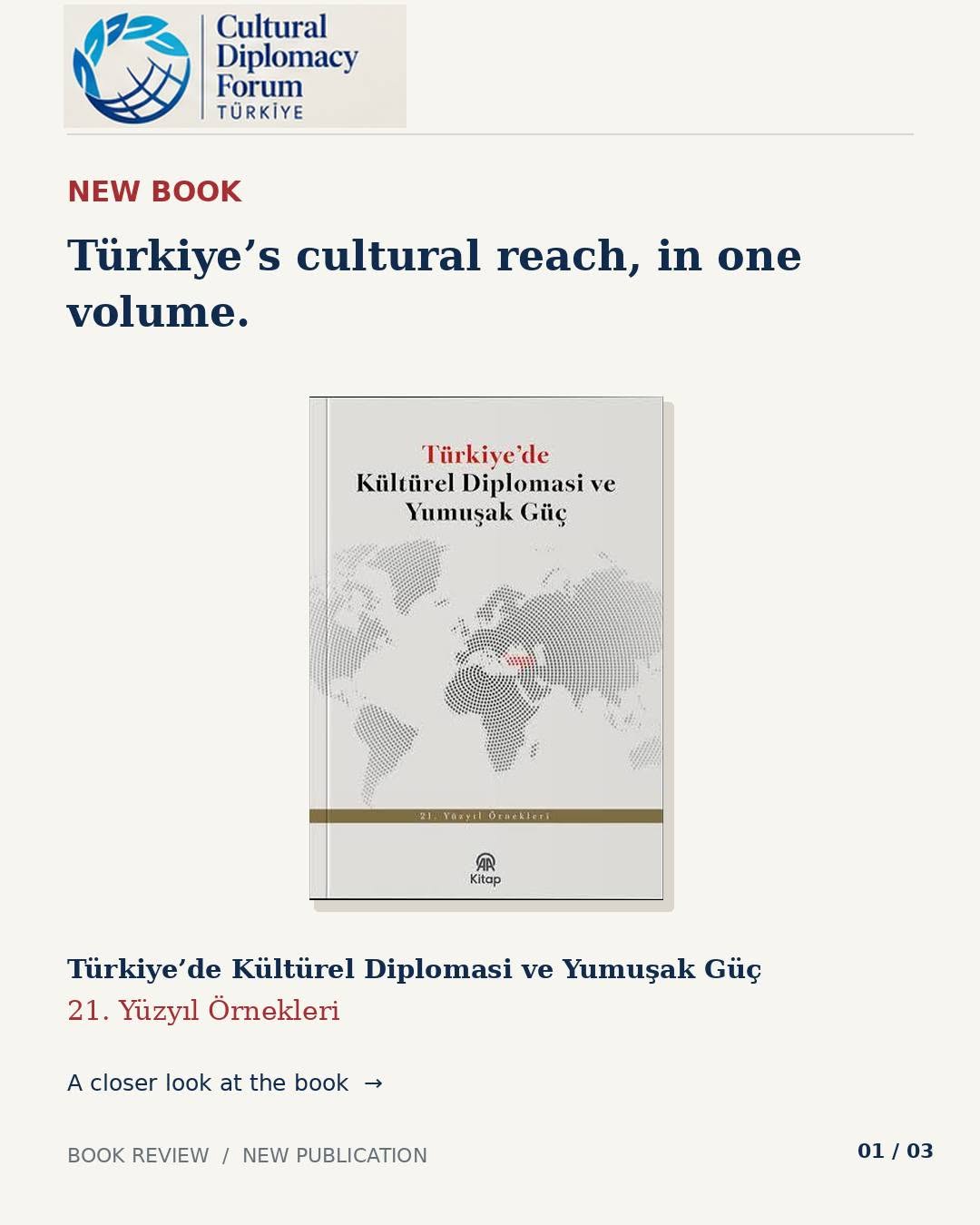
A new book on Türkiye’s cultural diplomacy and soft power has recently been published.
Türkiye’de Kültürel Diplomasi ve Yumuşak Güç: 21. Yüzyıl Örnekleri (Cultural Diplomacy and Soft Power in Türkiye: Twenty-First-Century Examples) brings together studies of how Türkiye engages with audiences beyond its borders. Rather than focusing on a single institution or medium, the collection moves between television, education, humanitarian work, sport, and food. Its range is the book’s main strength: readers can see activities often discussed separately as parts of a wider picture.
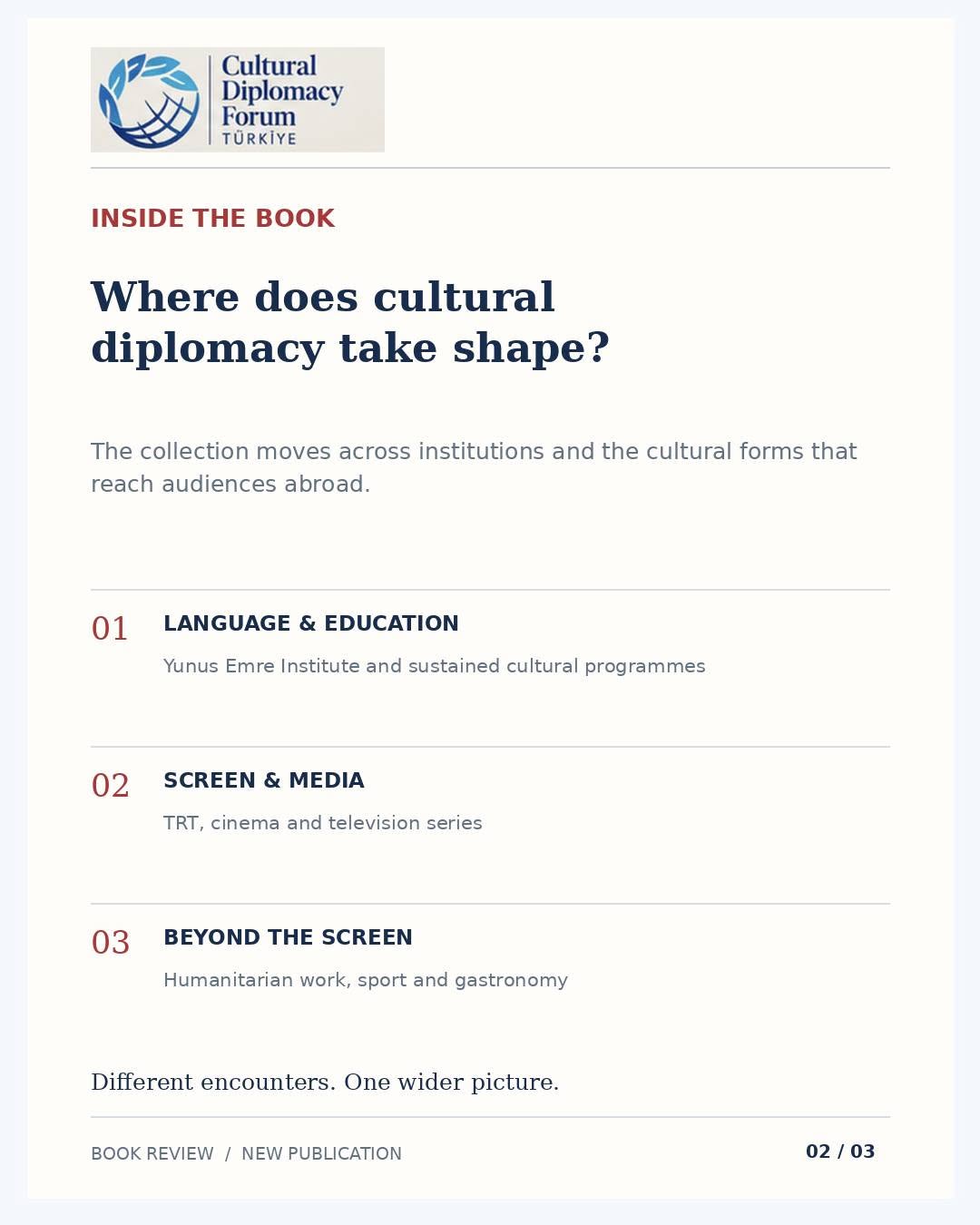
The volume begins by introducing cultural diplomacy and soft power, then turns to their expression in different fields. Chapters examine institutions, including the Yunus Emre Institute and TRT, alongside cinema and television, humanitarian and disaster diplomacy, sporting initiatives, and gastronomy. The Africa Culture House also appears among the book’s examples. This breadth gives readers several ways into the subject, whether their interest lies in public institutions or in the cultural forms people encounter in everyday life.
Reading these chapters together reveals how varied the people and organizations involved can be. A television series may travel through commercial channels, while a language program depends on sustained institutional work. Food may introduce someone to a culture through an ordinary meal. Each creates a different kind of encounter, and the book is useful for bringing those encounters into the same conversation.
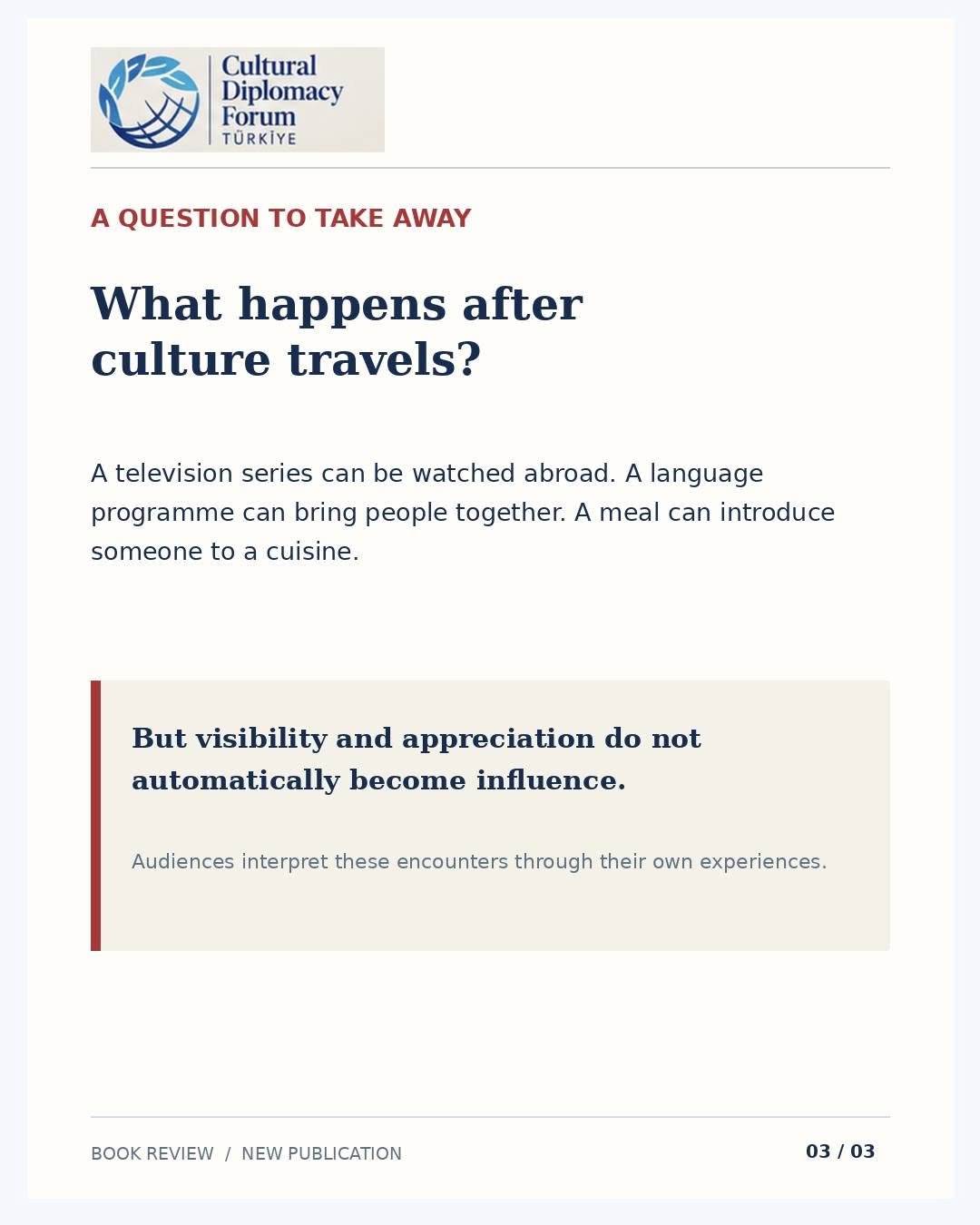
Its wide scope also prompts a question that deserves further attention: what happens after these initiatives reach an audience? Watching a series, appreciating a cuisine, or joining a cultural program does not necessarily produce the response its organizers intended. People interpret what they encounter through their own experiences and may form relationships that develop in unexpected ways. The book provides a starting point for thinking about the distance between visibility, appreciation, and influence.
For readers seeking an introduction to Türkiye’s international cultural engagement, this collection offers a map of its many settings and participants. It shows the institutions behind familiar cultural forms while inviting closer examination of how audiences receive them.